


SOFTWARE TESTING
Software testing is a critical phase in the software development lifecycle, as it ensures that a program or system functions correctly, meets requirements, and provides a reliable and secure experience for users.
Defective software can lead to serious issues, such as malfunctions, data loss, or system crashes. Software testing helps prevent such situations by ensuring the software is reliable and ready for use in real-world environments.
Detecting and fixing bugs during the early stages of development is significantly less costly than identifying and resolving issues after the software has been released.
Early error detection avoids expensive rework in the future, reducing costs associated with maintenance and post-release fixes.
Untested or faulty software can pose a security risk. Testing helps identify vulnerabilities or flaws that could be exploited by hackers or result in data breaches.
Software often needs to comply with specific industry standards or regulations. Testing ensures that the product meets these standards and adheres to all legal and regulatory requirements.
ISTQB, the International Software Testing Qualifications Board, is a non-profit organization and the leading international body for certifying skills in Software Testing.
The ISTQB® Certified Tester is the most widely adopted certification scheme for software testing professionals worldwide. The glossary and content of the certification programs have become the industry standard for professions related to software testing.
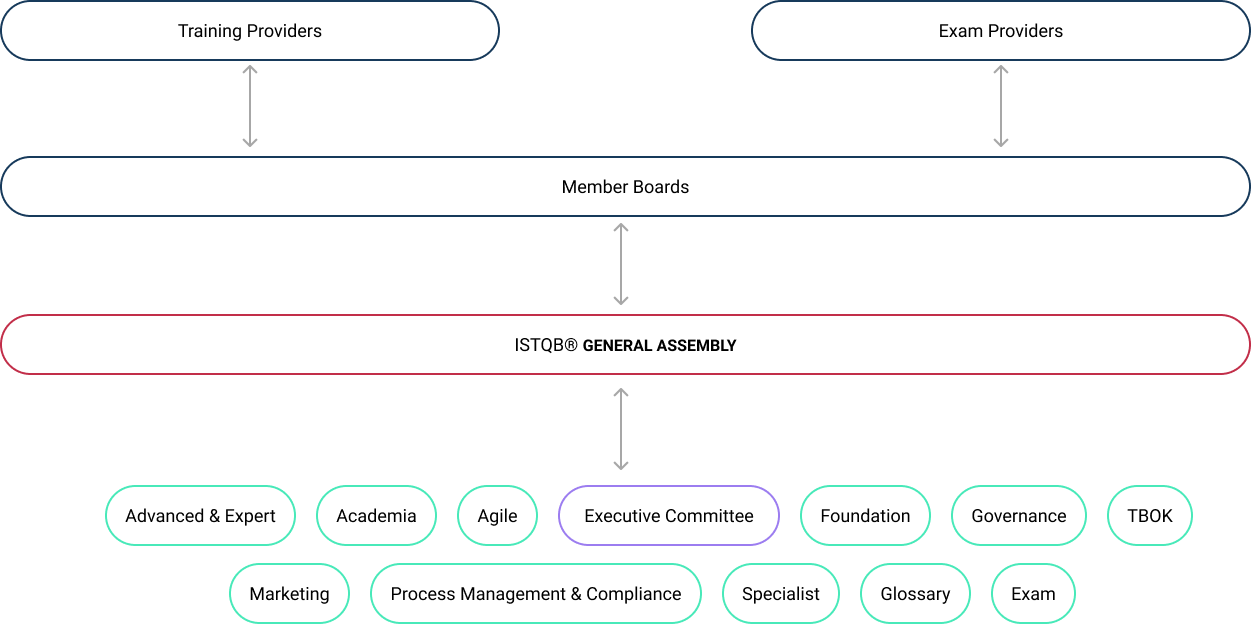
The ISTQB board is composed of global IT leaders from scientific, research, industrial, and consultancy fields.
The certification scheme has the following features:
High-Quality Syllabi: All syllabi are developed and reviewed by industry experts.
Global Recognition: Certifications are recognized worldwide due to the consistent application of ISTQB® policies and procedures by national and regional member boards.
Common Language: The ISTQB® Glossary provides a shared vocabulary for the profession.
Objectivity: Tester skill evaluation is independently conducted by ISTQB® to ensure impartiality.
Adherence to a Code of Ethics: All certified testers comply with the Code of Ethics defined by ISTQB®.
Public Availability: The ISTQB® Glossary and syllabi are freely available on the organization’s website and the websites of local member boards.
Independence: ISTQB®’s non-profit nature ensures that its content is not restricted by specific methodologies or technologies, drawing on best practices from a wide range of sources.
Continuous Improvement: Syllabi and related documents are constantly updated to meet the needs of businesses worldwide and to keep pace with the evolution of the profession.
Professional Standards: The certification benefits individuals and organizations by ensuring that testing professionals meet the high standards set by ISTQB®.
The number of certifications worldwide, in more than 130 countries, makes ISTQB® one of the top three international certification schemes in the IT field and by far the leader, in terms of numbers and global recognition, in the testing domain. ISTQB® is used as a reference point by multinational corporations and large IT companies, as well as by end-user organizations (both public and private) when preparing tenders and recruiting personnel.
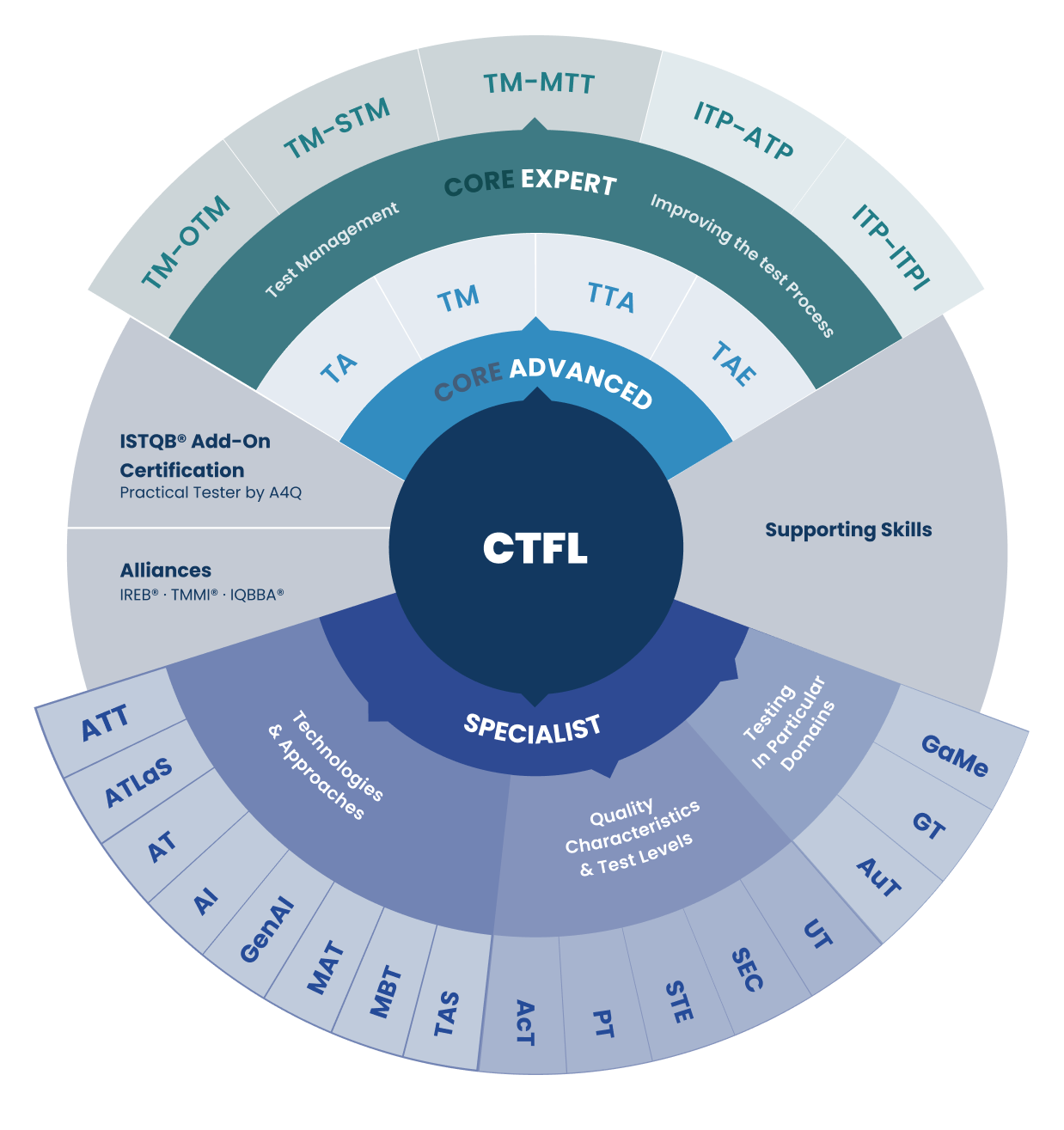
The ISTQB® Certified Tester is a personal certification aimed at professionals working in the field of Software Testing.
The ISTQB® Certified Tester certification exam can be taken through authorized certification bodies. In Italy, ITA-STQB is the certification body authorized by ISTQB®. The ISTQB® Certified Tester certificate does not have an expiration date.