


THE ISTQB CERTIFICATIONS
Clickable areas
These are the exams offered by ITA-STQB in Italian and English. Click on it to find out more.
Green exam title
These are the exams offered by ITA-STQB in Italian and English. Click on it to find out more.
Red exam title
These are the exams that ITA-STQB will soon offer in Italian and English. They will turn green when they're available.
FOUNDATION?ADVANCED?AGILE?SPECIALIST?
CERTIFICATIONSOFFERED IN ITALY

CT FOUNDATION LEVEL 4.0
The starting point for your
certification journey

PRACTICAL TESTER ADD-ON BY A4Q
The practical application of the basics
of Software Testing

CT ADVANCED LEVEL AGILE TESTER 2.0
ISTQB Advanced Certification for Agile Testers
in the new version 2.0 (2026)

CT AGILE TESTER
The basics of Software Testing in Agile Environment
in the previous version (2014, end of life)

CT ADVANCED LEVEL TEST MANAGEMENT 3.0
ISTQB Certification for Test Managers
in the new version 3.0 (2024)

CT ADVANCED LEVEL TEST ANALYST 4.0
The ISTQB Certification for the Test Analyst in the new version 4.0 (2025)

CT ADVANCED LEVEL TEST ANALYST 3.1
The ISTQB Certification for the Test Analyst in the previous version 3.1 (2021, end of life)

CT ADVANCED LEVEL TECHNICAL TEST ANALYST
The ISTQB Certification for the Technical Test Analyst

CT ADVANCED LEVEL TEST AUTOMATION ENGINEERING 2.0
ISTQB Certification for the Test Automation Engineer
in the new version 2.0 (2024)

CT SPECIALIST AI TESTING 2.0
ISTQB certification for those who test Artificial Intelligence systems in the new version 2.0 (2026)

CT SPECIALIST AI TESTING 1.0
ISTQB certification for those testing Artificial Intelligence systems in the previous version 1.0 (2021, end of life)

CT SPECIALIST ACCEPTANCE TESTING
The ISTQB certification for the Acceptance Testing specialist

CT SPECIALIST PERFORMANCE TESTING
The ISTQB certification for the Performance Testing specialist

CT SPECIALIST MOBILE APPLICATION TESTING
The ISTQB certification for the Mobile Application Testing specialist

CT SPECIALIST AUTOMOTIVE SOFTWARE TESTER
The ISTQB certification for the Automotive Software Testing specialist

CT SPECIALIST TEST AUTOMATION STRATEGY
The ISTQB certification for the Test Automation Strategy specialist

CT SPECIALIST TESTING WITH GENERATIVE AI
The ISTQB certification for the specialist of Generative AI used in testing

CT SPECIALISTSECURITY TEST ENGINEER
The ISTQB certification for the specialist of Security Testing

CT SPECIALISTFINANCE TESTING
The ISTQB certification for the specialist of testing for software in the financial domain

CT SPECIALISTQUALITY IN DEVOPS
The ISTQB certification for the specialist of Quality in DevOps
CERTIFIED TESTER
FOUNDATIONFOUNDATION
4.0
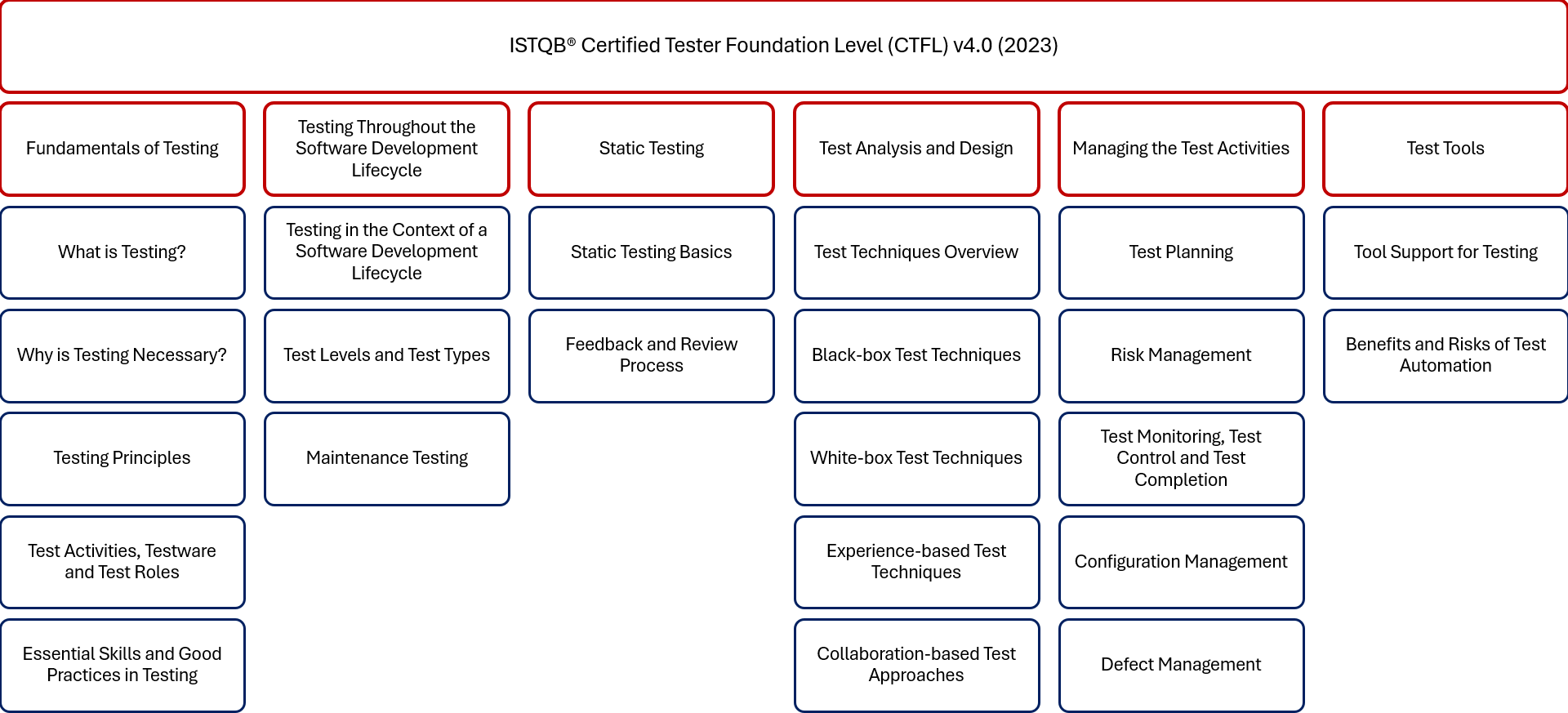
The Foundation Level certification is designed for professionals who need to demonstrate practical knowledge of the fundamental concepts of software testing. It is relevant for roles such as test designers, test analysts, test engineers, test consultants, test managers, and IT professionals in general.
The Foundation Level certification is also suitable for anyone who has acquired a basic understanding of software testing, such as project managers, quality managers, software development managers, business analysts, IT directors, and management consultants.
While it is not a formal prerequisite, it is recommended that candidates for the Foundation Level certification have at least six months of practical experience in a testing-related professional role.
Only holders of a Core Foundation Level certificate can advance to the Core Advanced Level certification and subsequently to the Expert Level. Additionally, they can pursue certifications in the Agile and Specialist streams.
PRACTICAL TESTER
ADD-ONADD-ON
BY A4Q
The Practical Tester by A4Q certification, an add-on to ISTQB, is the bridge that connects software testing theory to daily practice.
The main objective is to transform recognized testing techniques – such as equivalence partitions, boundary value analysis, decision tables and state transitions – into operational skills, capable of ensuring software quality from the first test cycle.

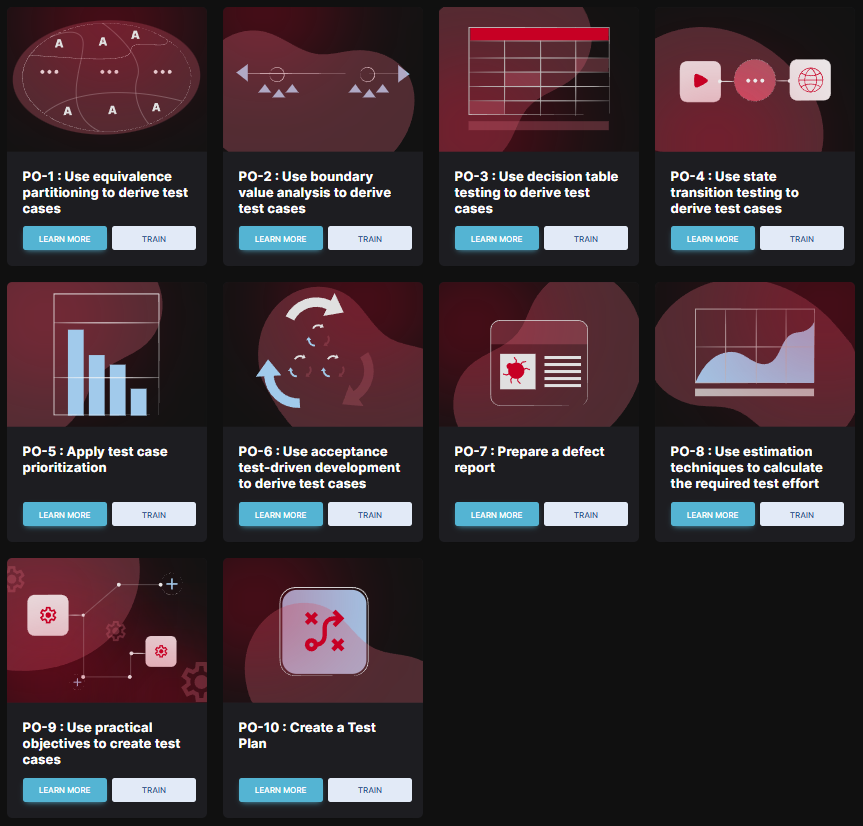
Thanks to the AI-driven platform, each exercise becomes an interactive experience: you will find yourself designing test cases, compiling test plans and writing defect reports in contexts similar to those of a real project. And that's not all: the system offers immediate and detailed feedback, highlighting your strengths and suggesting improvement strategies, to refine your approach to testing step by step.
At the end of the course, an “open-text” exam of 15 questions awaits you to complete in 60 minutes. Each answer is evaluated by experts, who assign partial scores that reflect your accuracy and completeness.
Anyone can benefit from this certification: those taking their first steps in the world of testing will find a practical and structured guide; professionals already certified ISTQB Certified Tester Foundation Level will be able to demonstrate that they know how to concretely apply what they have learned; quality assurance engineers and members of development teams will see the value of their skills recognized.
For you testers, it means an important international seal on your practical skills: you will have more confidence in selecting and applying the right techniques, speeding up analysis times and improving communication with developers and stakeholders.
For companies, on the other hand, it means being able to count on figures ready to integrate immediately into their staff, with a tangible return on training investment, and a standardization of testing skills that translates into more reliable and higher quality software.
The Practical Tester certification by A4Q, add-on of ISTQB, is the concrete proof of a preparation that combines theory, practice and global recognition.
CERTIFIED
ADVANCEDADVANCED
AGILE TESTER 2.0
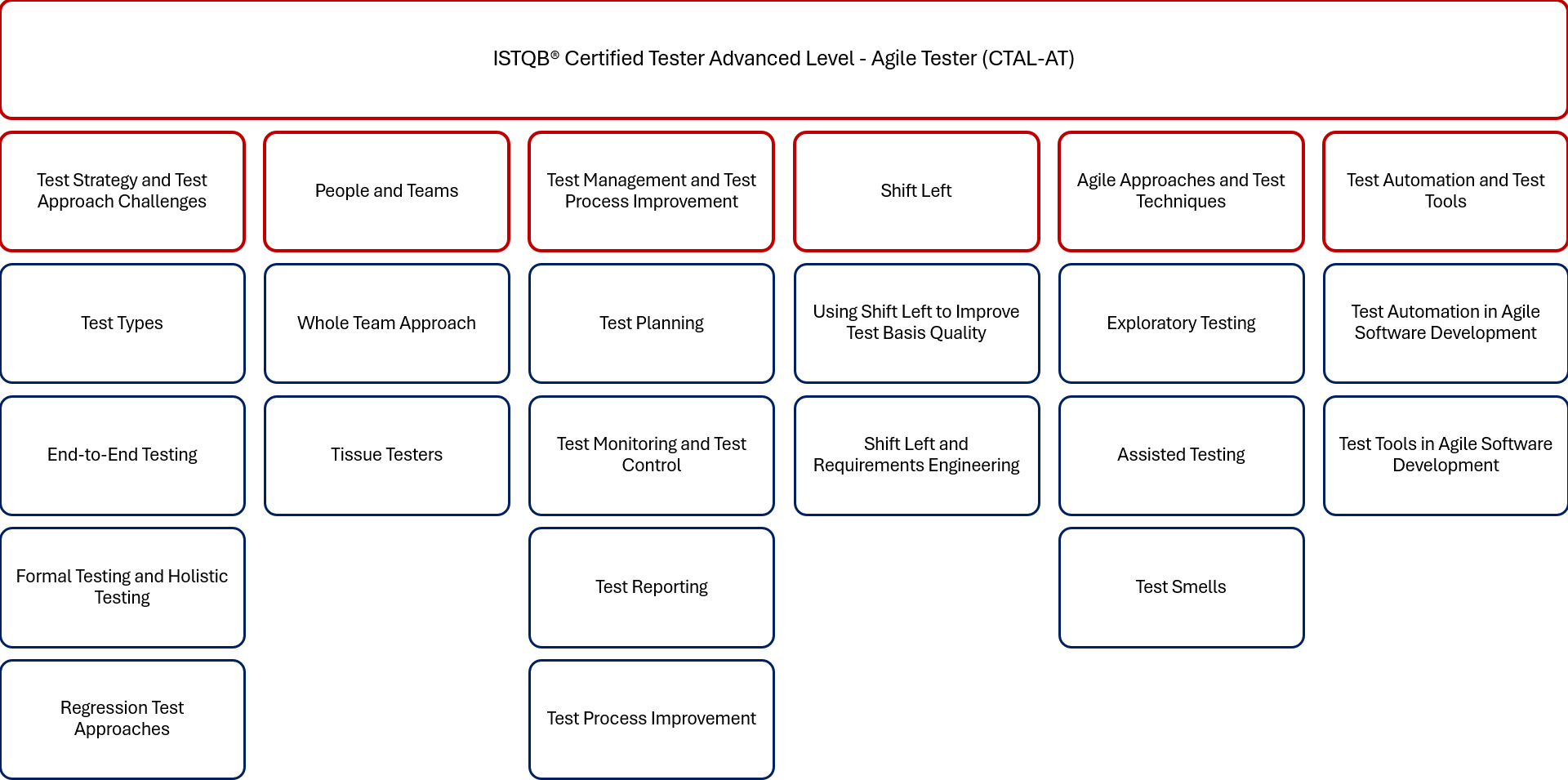
The Advanced Level qualification is intended for individuals who have reached an advanced stage in their software testing careers, including roles such as Test Analyst, Test Engineer, Software Developer, Business Analyst, Product Owner, Scrum Master, and Quality Manager.
The ISTQB® Certified Tester Advanced Level Agile Tester (CTAL-AT) v2.0 certification defines the knowledge and skills required of experienced testers working in Agile environments. It addresses topics such as Agile testing strategy, team collaboration, shift-left approaches, and the most current Agile testing techniques and practices.
The syllabus was developed to reflect the maturity of Agile software development, to position quality as a shared team responsibility, and to enable testing professionals to provide rapid and continuous feedback to support business value creation in modern Agile and DevOps environments.
The certification is also ideal for those who want to contribute to quality in Agile environments and:
- Collaborate effectively within cross-functional teams
- Apply modern Agile testing practices
- Support faster, higher-quality releases
- Share quality responsibility with the entire Agile team
To receive the Advanced Level Agile Tester certification, candidates must hold the Foundation Certificate and demonstrate through the exam that they have the practical experience required to obtain the Advanced Level certification.
CERTIFIED
AGILEAGILE
TESTER
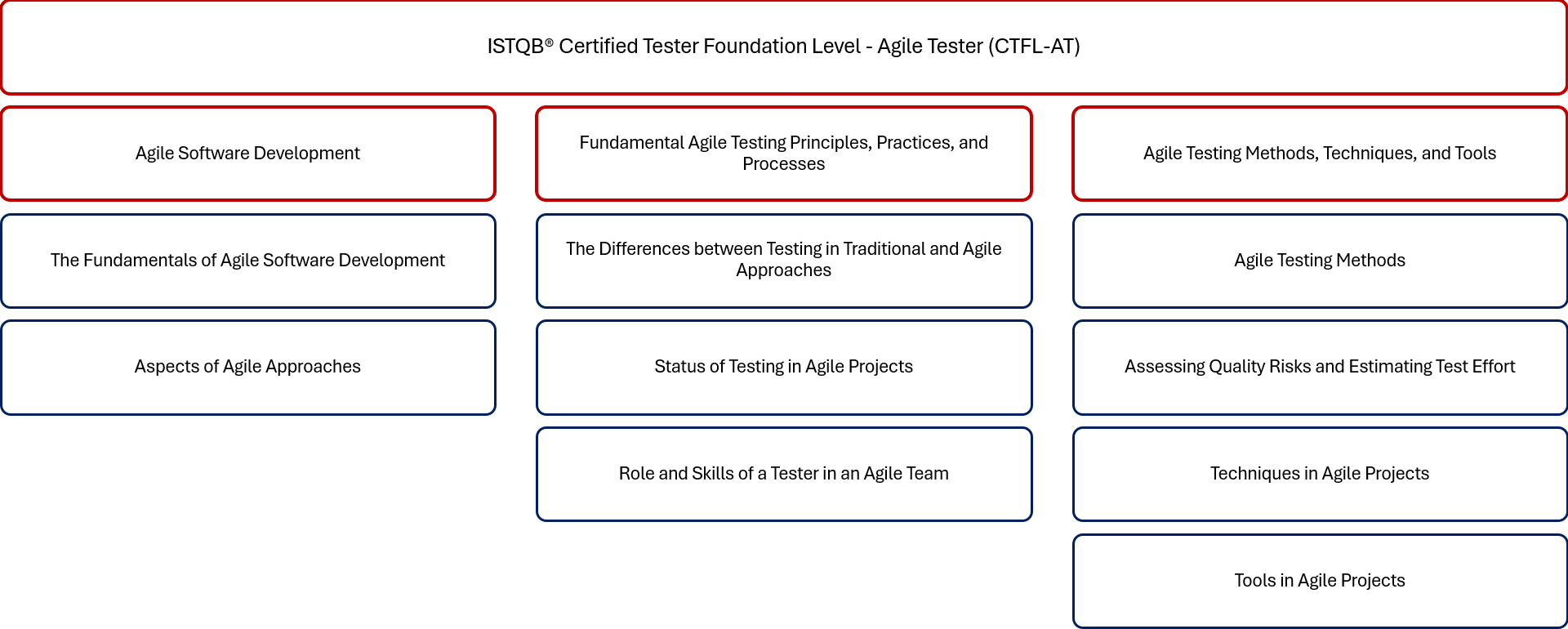
ISTQB has released version 2.0, the latest (2026), of the Advanced Agile Tester syllabus, and it is now possible to take the exam based on the contents of version 2.0.
For a few months, it will be possible to take the exam in two different versions: the latest 2.0 (2026) or the previous version 1.0 (2014). Therefore, those who have already prepared for the exam based on the previous version can still take the exam in that version for a limited time.
The Agile Tester certifications for both versions hold the same value and validity now and in the future.
Those who have obtained or will obtain certification under the 1.0 (2014) version will not need to recertify. Recertification may become useful in the future, but it will not be mandatory. It will serve only to stay updated on revised topics and meet specific requirements that might be expected from certified professionals.
IF YOU HAVE PREPARED FOR YOUR CERTIFICATION EXAM OR ATTENDED A COURSE BASED ON THE 1.0 (2014) VERSION, YOU CAN TAKE THE EXAM IN THIS VERSION ONLY IN ITALIAN UNTIL NOVEMBER 6, 2027, OR IN ENGLISH UNTIL MAY 6, 2027.
AFTER THESE DATES, THE CERTIFIED TESTER ADVANCED LEVEL AGILE TESTER EXAM WILL BE AVAILABLE ONLY BASED ON THE CONTENT OF THE 2026/2.0 SYLLABUS IN THE RESPECTIVE LANGUAGE.
For more information, consult the dedicated FAQs, visit the EXAMS, STUDY MATERIAL, and TRAINING sections, or contact us using the contact form.
CERTIFIED
ADVANCEDADVANCED
TEST MANAGEMENT 3.0
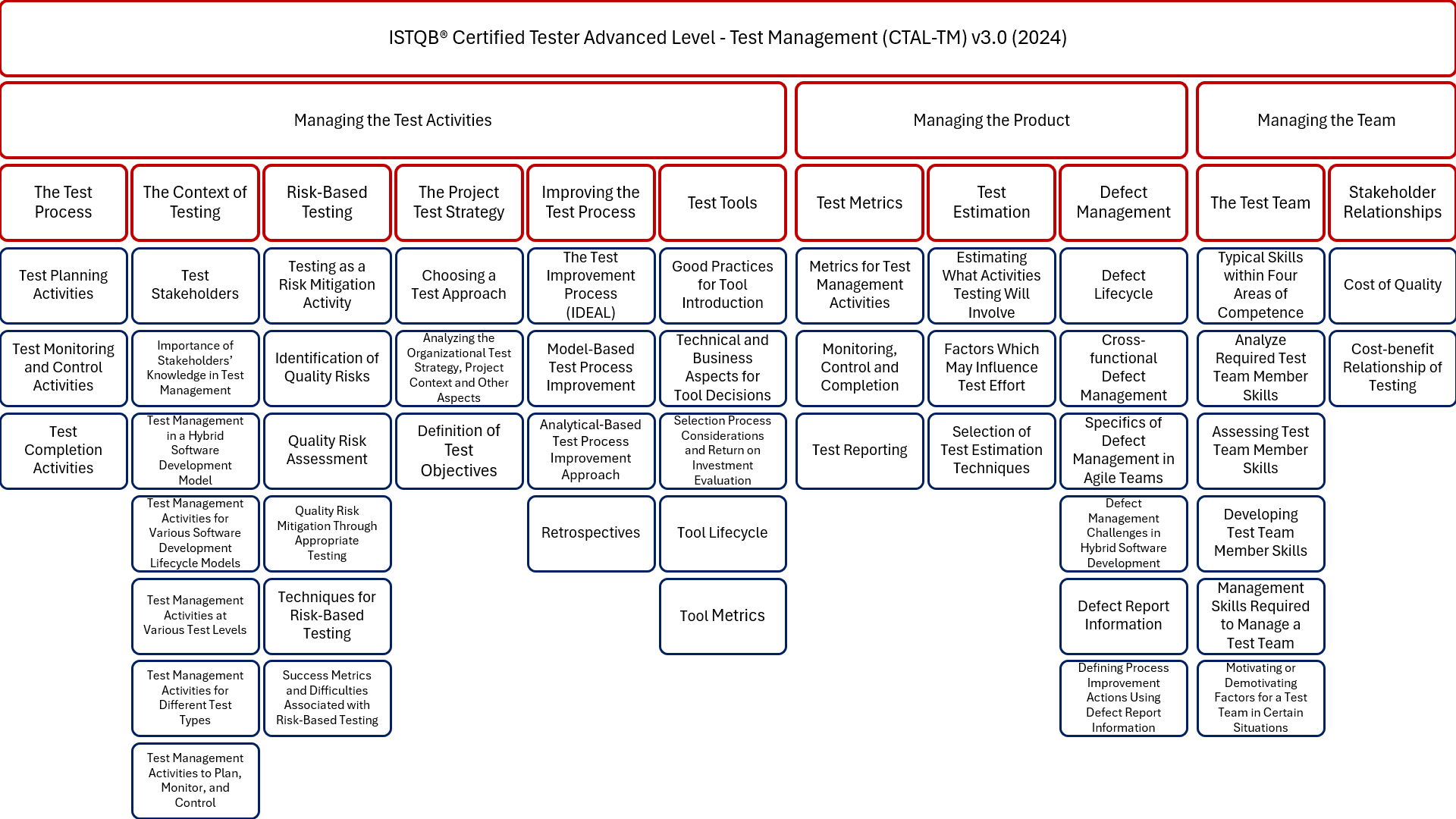
The Advanced Level qualification is aimed at individuals who have reached an advanced stage in their software testing careers. This includes roles such as testers, test analysts, test engineers, test consultants, test managers, user acceptance testers, and software developers.
Advanced Level certifications are also suitable for anyone who has acquired a deeper understanding of software testing, such as project managers, quality managers, software development managers, business analysts, IT directors, and management consultants.
To obtain the Advanced Level Test Manager certification, candidates must hold the Foundation Certificate and demonstrate during the examination that they have the practical experience required to certify at the advanced level.
The Advanced Test Manager certification is particularly suitable for roles that:
- Manage a testing project by implementing the mission, objectives, and processes for the testing organization.
- Organize and lead risk identification and risk analysis sessions, and use the results of these sessions for test estimation, planning, monitoring, and control.
- Create and implement test plans aligned with the organization’s policies and test strategies.
- Continuously monitor and control test activities to meet project objectives.
- Assess and report the test status to project stakeholders.
- Identify skills and resource gaps within their test team and contribute to identifying appropriate resources.
- Identify and plan for the development of necessary skills within their test team.
- Propose a business case for testing activities that outlines expected costs and benefits.
- Ensure proper communication within the test team and with other project stakeholders.
- Participate in and lead test process improvement initiatives.
CERTIFIED
ADVANCEDADVANCED
TEST ANALYST 4.0
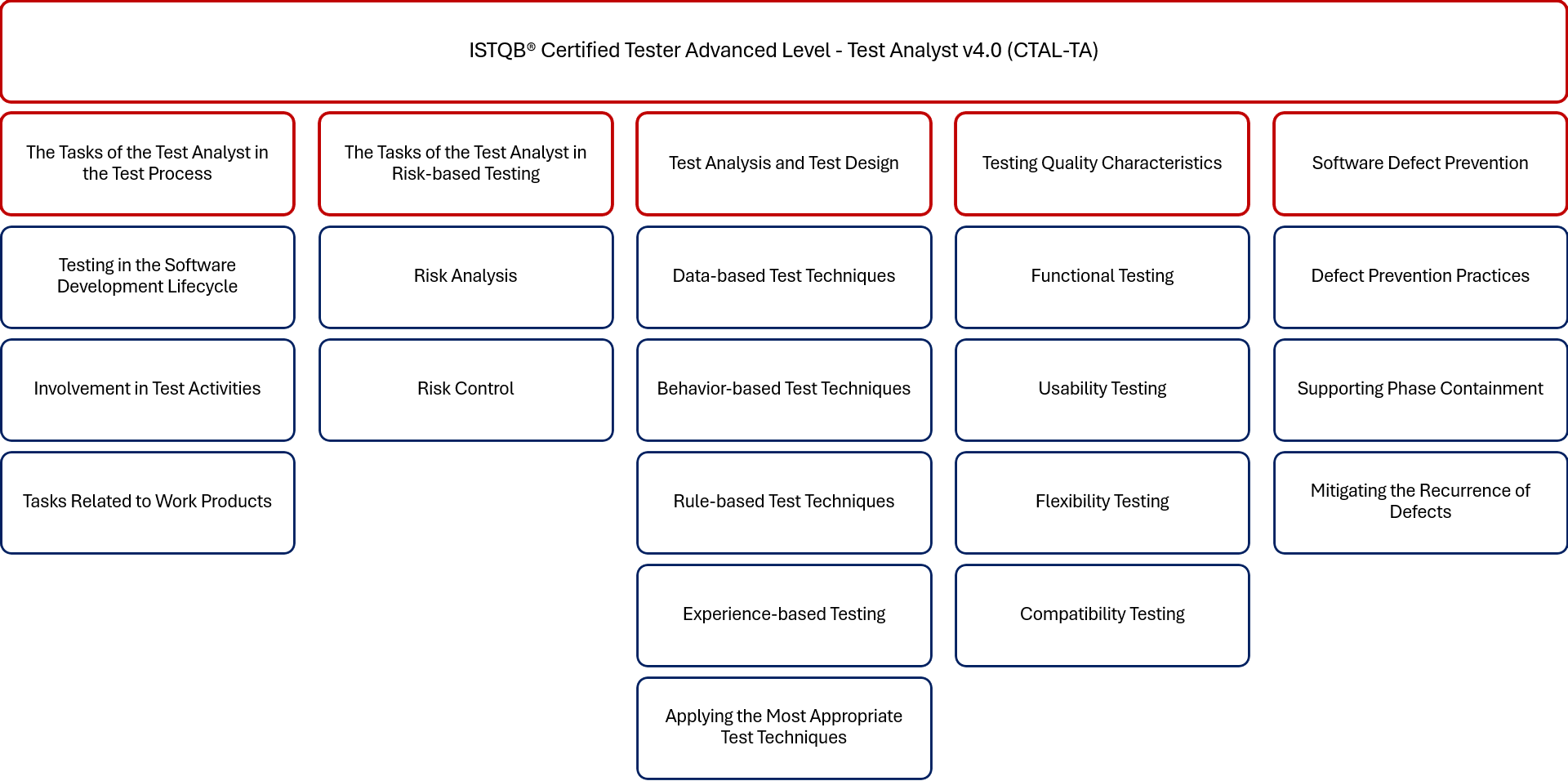
The Advanced Level qualification is aimed at individuals who have reached an advanced stage in their software testing careers. This includes roles such as testers, test analysts, test engineers, test consultants, test managers, user acceptance testers, and software developers.
Advanced Level certifications are also suitable for anyone who has acquired a deeper understanding of software testing, such as project managers, quality managers, software development managers, business analysts, IT directors, and management consultants.
The Advanced Level Test Analyst certification provides the skills needed to perform structured and thorough software testing across the software development life cycle. It details the test analyst’s role and responsibilities at every step of a standard test process and expands on important test techniques. It mainly focuses on functional testing but also discusses user-focused, non-functional testing.
The Advanced Level Test Analyst certification is aimed at people who wish to further develop their expertise in test analysis and test design techniques.
To obtain the Advanced Level Test Analyst certification, candidates must hold the Foundation Certificate and demonstrate during the examination that they have the practical experience required for advanced-level certification.
The test analyst is understood as a role which:
- focuses more on the business needs of the customer than on technical aspects of testing
- performs mainly functional testing but also contributes to user-focused, non-functional testing, such as usability, adaptability, installability, or interoperability testing
- uses black-box test techniques and experience-based testing rather than white-box test techniques
- improves the effectiveness of testing using defect prevention techniques
CERTIFIED
ADVANCEDADVANCED
TEST ANALYST 3.1 (2021)
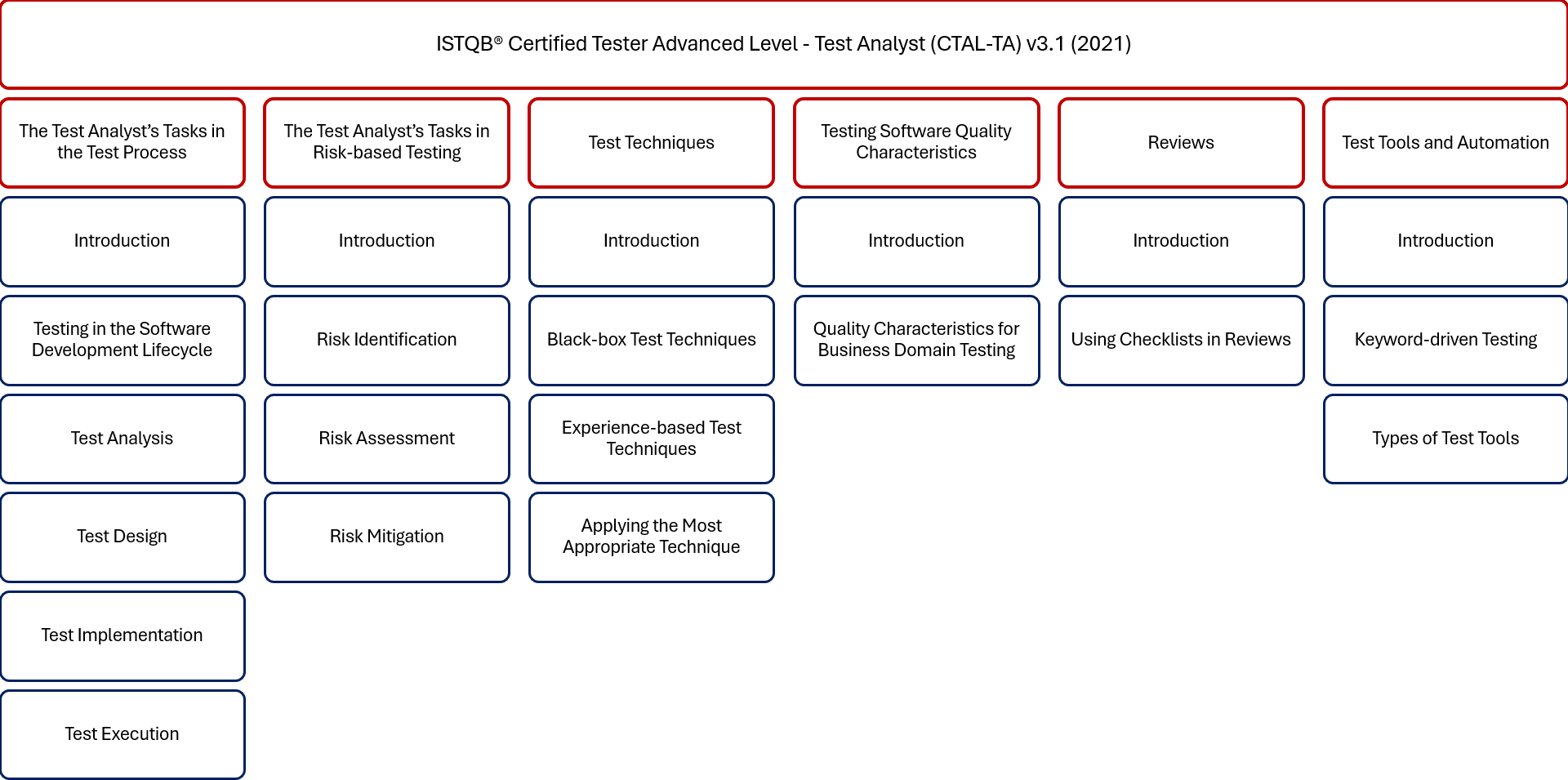
ISTQB has released version 4.0, the latest (2025), of the Advanced Test Analyst syllabus, and it is now possible to take the exam based on the contents of version 4.0.
For a few months, it will be possible to take the exam in two different versions: the latest 4.0 (2025) or the previous version 3.1 (2021). Therefore, those who have already prepared for the exam based on the previous version can still take the exam in that version for a limited time.
The Advanced Test Analyst certifications for both versions hold the same value and validity now and in the future.
Those who have obtained or will obtain certification under the 3.1 (2021) version or earlier will not need to recertify. Recertification may become useful in the future, but it will not be mandatory. It will serve only to stay updated on revised topics and meet specific requirements that might be expected from certified professionals.
IF YOU HAVE PREPARED FOR YOUR CERTIFICATION EXAM OR ATTENDED A COURSE BASED ON THE 3.1 (2021) VERSION, YOU CAN TAKE THE EXAM IN THIS VERSION ONLY IN ITALIAN UNTIL NOVEMBER 16, 2026, OR IN ENGLISH UNTIL MAY 16, 2026.
AFTER THESE DATES, THE CERTIFIED TESTER ADVANCED LEVEL TEST ANALYST EXAM WILL BE AVAILABLE ONLY BASED ON THE CONTENT OF THE 2025/4.0 SYLLABUS IN THE RESPECTIVE LANGUAGE.
For more information, consult the dedicated FAQs, visit the EXAMS, STUDY MATERIAL, and TRAINING sections, or contact us using the contact form.
CERTIFIED
ADVANCEDADVANCED
TECHNICAL TEST ANALYST
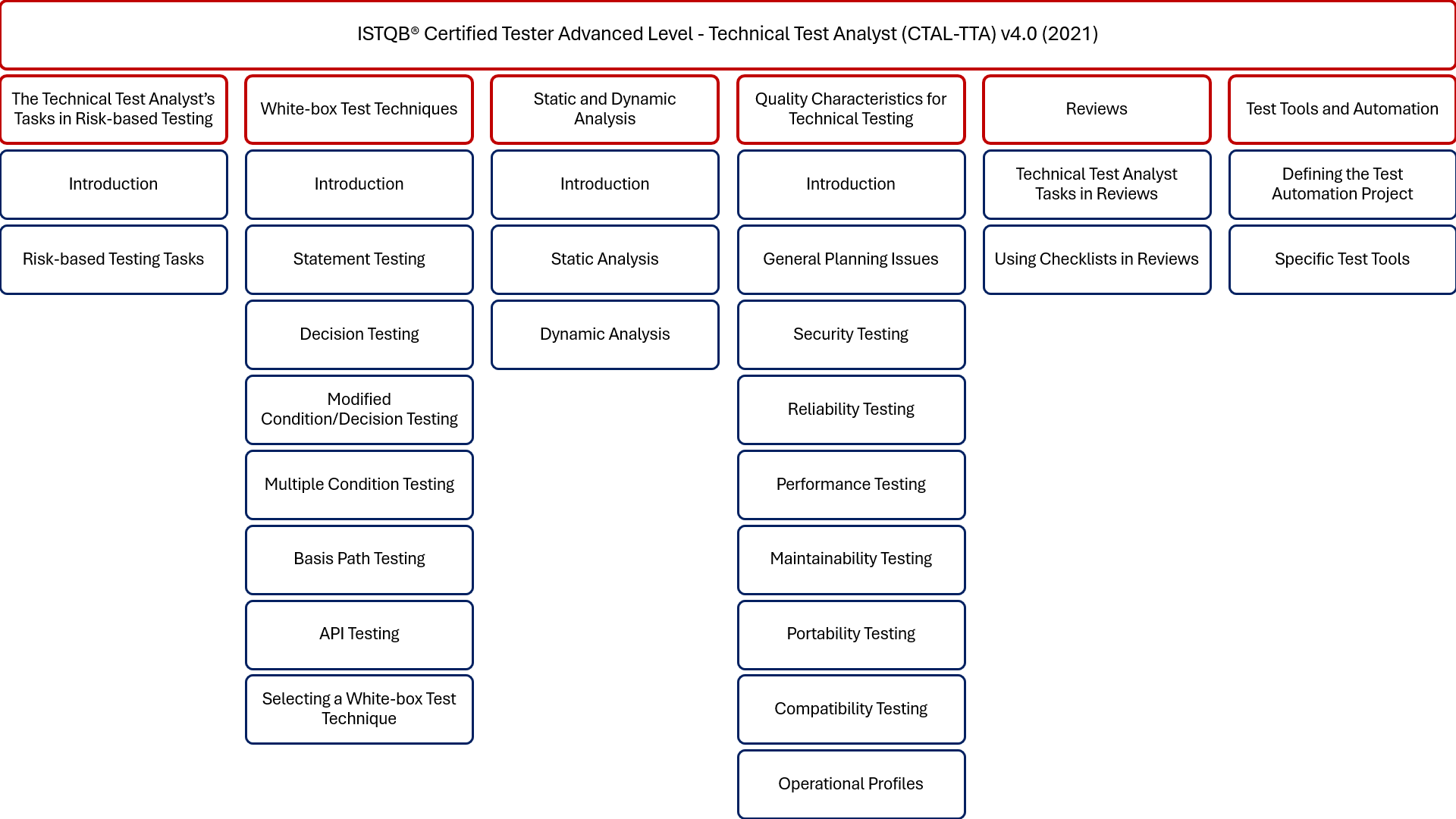
To obtain the Advanced Level Technical Test Analyst certification, candidates must hold the Foundation Certificate and demonstrate during the examination that they have the practical experience required for advanced-level certification.
The Advanced Technical Test Analyst certification is particularly suited for roles that:
- Identify and classify typical risks associated with performance, security, reliability, portability, and maintainability of software.
- Create test plans detailing the planning, design, and execution of tests to mitigate these risks.
- Select and apply appropriate structural design techniques to ensure tests provide an adequate level of confidence based on code coverage.
- Participate effectively in technical reviews with developers and software architects, applying knowledge of common code and architecture defects.
- Recognize risks in software architecture and create test plan elements to mitigate these risks through dynamic analysis.
- Suggest improvements for code security, maintainability, and testability by applying static analysis.
- Describe the expected costs and benefits of introducing specific types of test automation.
- Select appropriate tools to automate testing techniques.
- Understand technical challenges and concepts related to the application of test automation.
CERTIFIED
ADVANCEDADVANCED
TEST AUTOMATION ENGINEERING 2.0
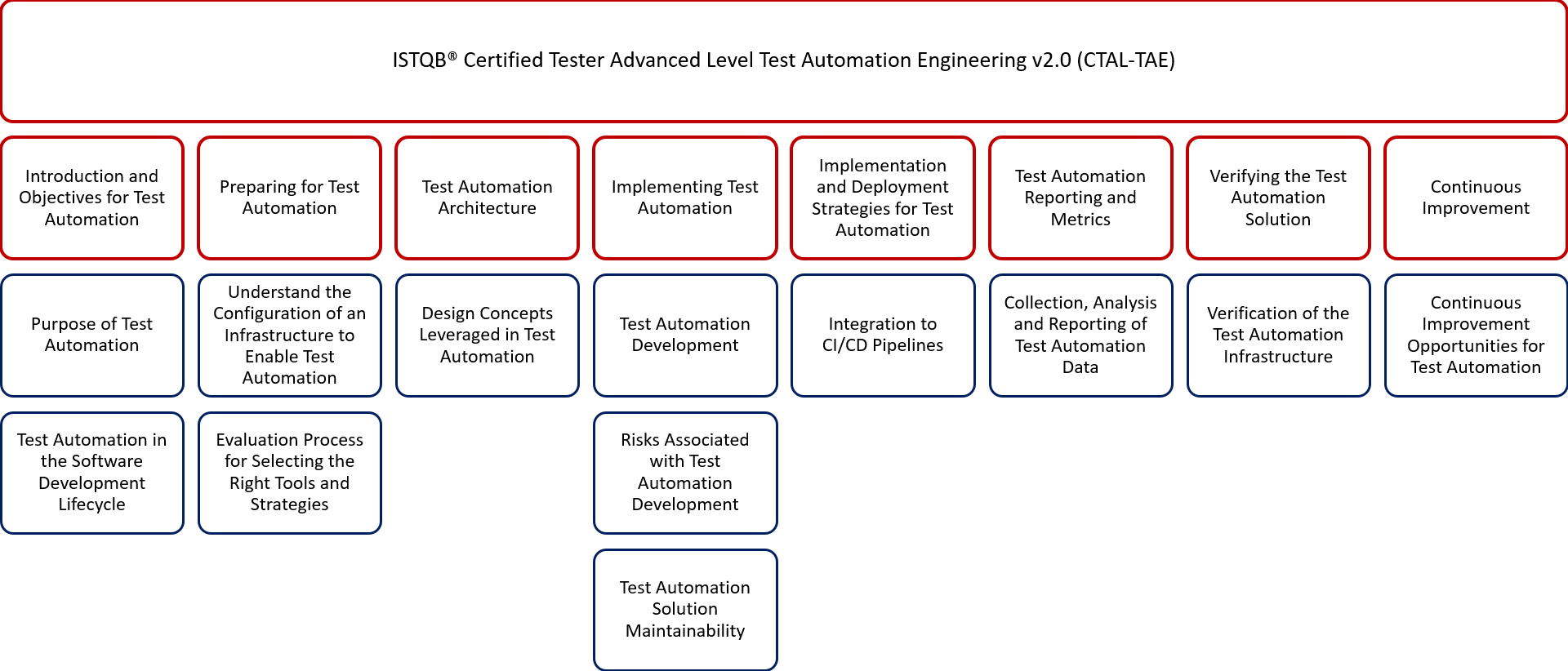
To obtain the Advanced Level Test Automation Engineering certification, candidates must hold the Foundation Certificate and demonstrate during the examination that they have the practical experience required for advanced-level certification.
The Advanced Level Test Automation Engineering certification is aimed at anyone involved in software testing and test automation. This includes individuals in roles such as testers, test analysts, test automation designers, consultants, test managers, and software developers. This certification is also suitable for anyone wishing to demonstrate a foundational knowledge of test automation, such as project managers, quality managers, software development managers, business analysts, and IT directors.
CERTIFIED
SPECIALISTSPECIALIST
AI TESTING 2.0
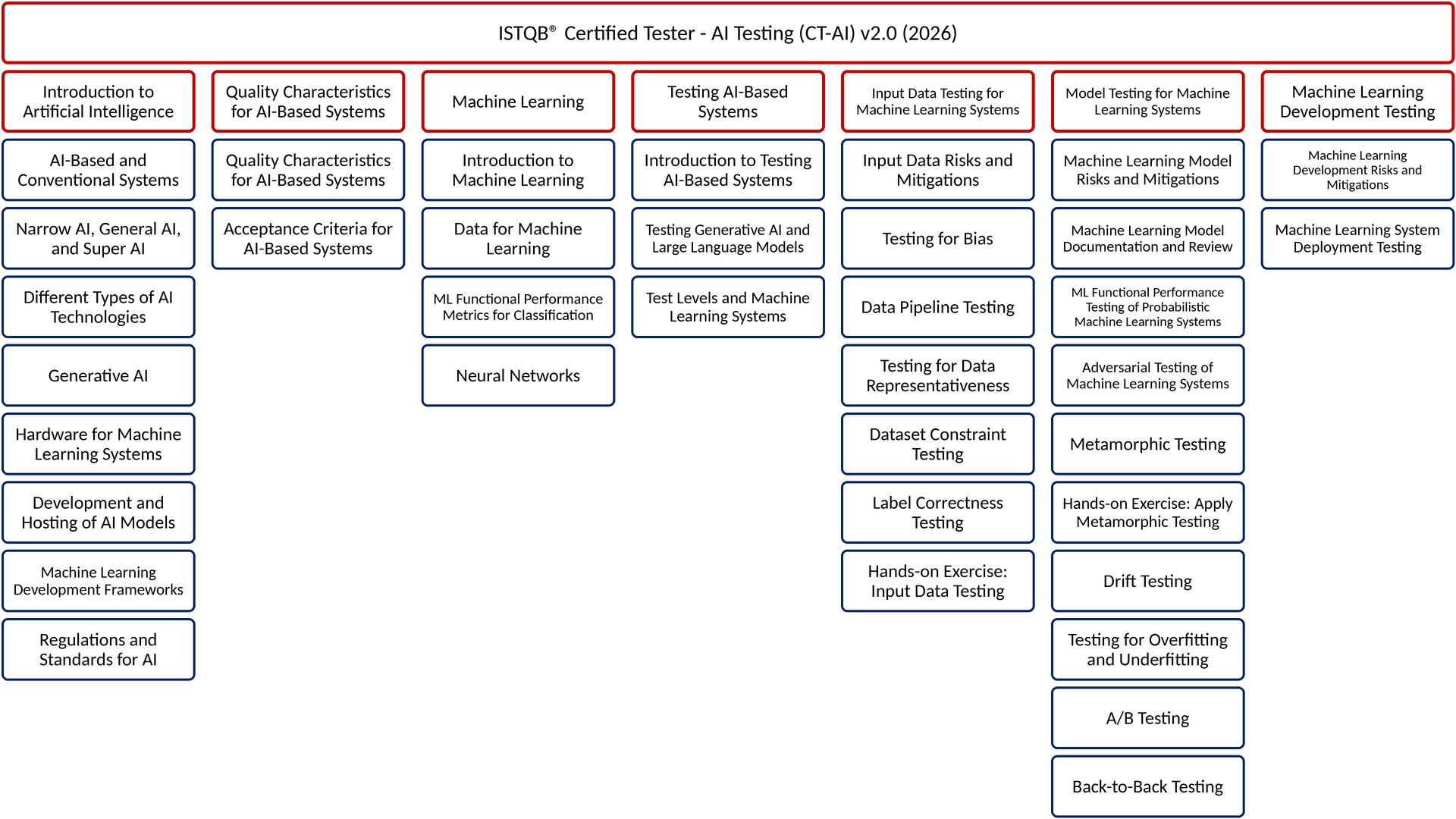
To apply for the Specialist AI Testing certification, candidates must hold the Foundation Certificate.
The ISTQB® Certified Tester AI Testing (CT-AI) v2.0 certification focuses on testing artificial intelligence (AI)-based systems, including machine learning and generative AI systems, such as large language models. It provides the knowledge needed to design and execute tests for AI-based systems, addressing their specific characteristics, including probabilistic behavior, nondeterminism, and data dependence. It also introduces AI-specific quality characteristics relevant to testing AI-based systems.
The syllabus follows a lifecycle approach, encompassing input data testing, model testing, and machine learning development testing, along with relevant testing approaches for modern AI-based systems.
Individuals holding the ISTQB® Certified Tester - AI Testing certification should be able to achieve the following objectives:
- Understand the current state of AI, including generative AI.
- Experience implementing and testing machine learning models.
- Understand the operation and testing of simple neural networks.
- Understand the specific AI quality characteristics defined by ISO/IEC 25059.
- Calculate and interpret machine learning functional performance metrics for machine learning models.
- Recognize the scope and importance of the two levels of testing specific to machine learning systems.
- Contribute to the development of an effective testing strategy for a machine learning system.
- Design and execute test cases for machine learning systems.
CERTIFIED
SPECIALISTSPECIALIST
AI TESTING 1.0 (2021)
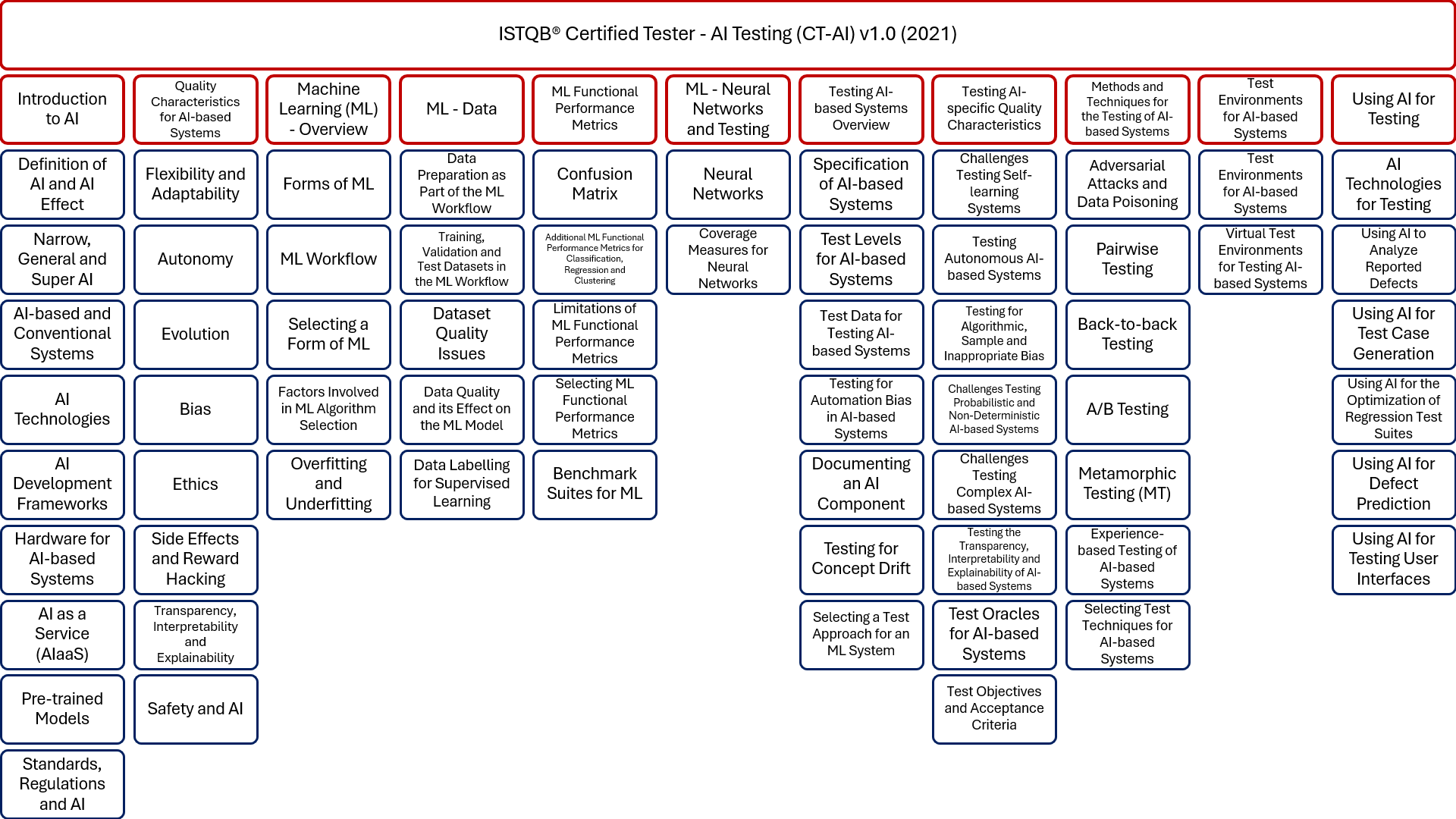
ISTQB has released version 2.0, the latest (2026), of the Specialist AI Testing syllabus, and it is now possible to take the exam based on the contents of version 2.0.
For a few months, it will be possible to take the exam in two different versions: the latest 2.0 (2026) or the previous version 1.0 (2021). Therefore, those who have already prepared for the exam based on the previous version can still take the exam in that version for a limited time.
The Specialist AI Testing certifications for both versions hold the same value and validity now and in the future.
Those who have obtained or will obtain certification under the 1.0 (2021) version or earlier will not need to recertify. Recertification may become useful in the future, but it will not be mandatory. It will serve only to stay updated on revised topics and meet specific requirements that might be expected from certified professionals.
IF YOU HAVE PREPARED FOR YOUR CERTIFICATION EXAM OR ATTENDED A COURSE BASED ON THE 1.0 (2021) VERSION, YOU CAN TAKE THE EXAM IN THIS VERSION ONLY IN ITALIAN UNTIL OCTOBER 21, 2027, OR IN ENGLISH UNTIL APRIL 21, 2027.
AFTER THESE DATES, THE CERTIFIED TESTER SPECIALIST AI TESTING EXAM WILL BE AVAILABLE ONLY BASED ON THE CONTENT OF THE 2026/2.0 SYLLABUS IN THE RESPECTIVE LANGUAGE.
For more information, consult the dedicated FAQs, visit the EXAMS, STUDY MATERIAL, and TRAINING sections, or contact us using the contact form.
CERTIFIED
SPECIALISTSPECIALIST
TEST AUTOMATION
STRATEGY
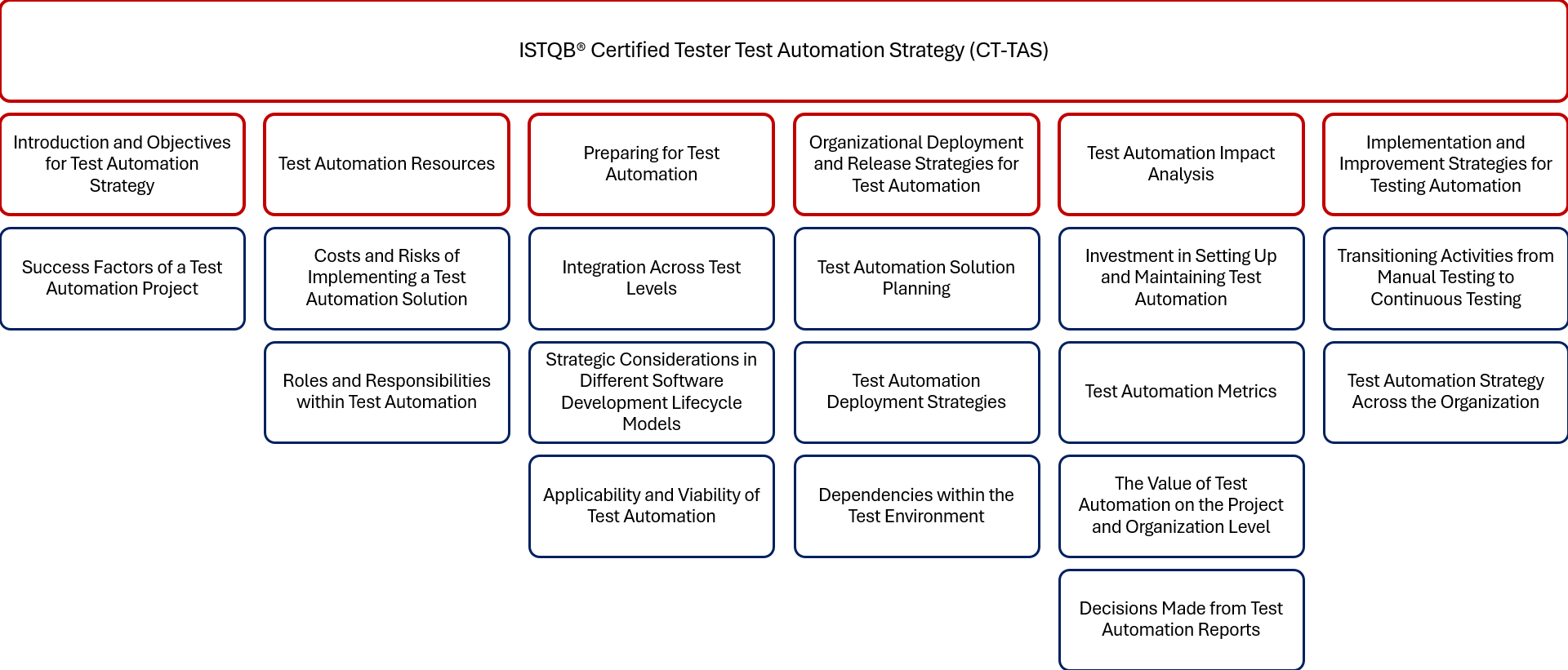
To apply for the Specialist Test Automation Strategy certification, candidates must hold the Foundation Certificate.
The Certified Tester Test Automation Strategy Specialist qualification is aimed at anyone involved in software testing and test automation. The syllabus presents multiple factors to consider when planning test automation within an organization. The Test Automation Strategy syllabus addresses test automation needs that go beyond the technical challenges of tool implementation and integration. A strategic view of test automation provides a systematic and consistent approach to implementation across the organization’s projects, ultimately demonstrating tangible value to the organization.
The target audience includes testers, test analysts, test automation engineers, test consultants, test architects, test managers, and software developers. This certification is also suitable for those seeking a basic understanding of test automation, such as project managers, quality managers, software development managers, business analysts, IT directors, and management consultants.
A candidate who has achieved the CT-TAS certification should be able to:
Understand factors from software and systems that influence the success of test automation
Identify costs and risks of implementing a test automation solution
Understand the roles and responsibilities of people who are contributing to test automation
Plan for the integration of test automation across test levels
Identify strategic considerations for test automation implementation in different software development lifecycle models
Understand applicability and viability of test automation
Plan test automation solutions that meet the organizational needs
Understand test automation deployment strategies
Learn which test automation metrics help drive decision-making
Identify ways in which test automation brings value to the project and organization
Identify test automation reporting requirements to address stakeholder needs
Define transitioning activities from manual testing to test automation
Define a test automation strategy that ensures projects share assets and methods to ensure consistent implementation across the organization
Understand costs for setting up and maintaining test automation
CERTIFIED
SPECIALISTSPECIALIST
TESTING WITH
GENERATIVE AI
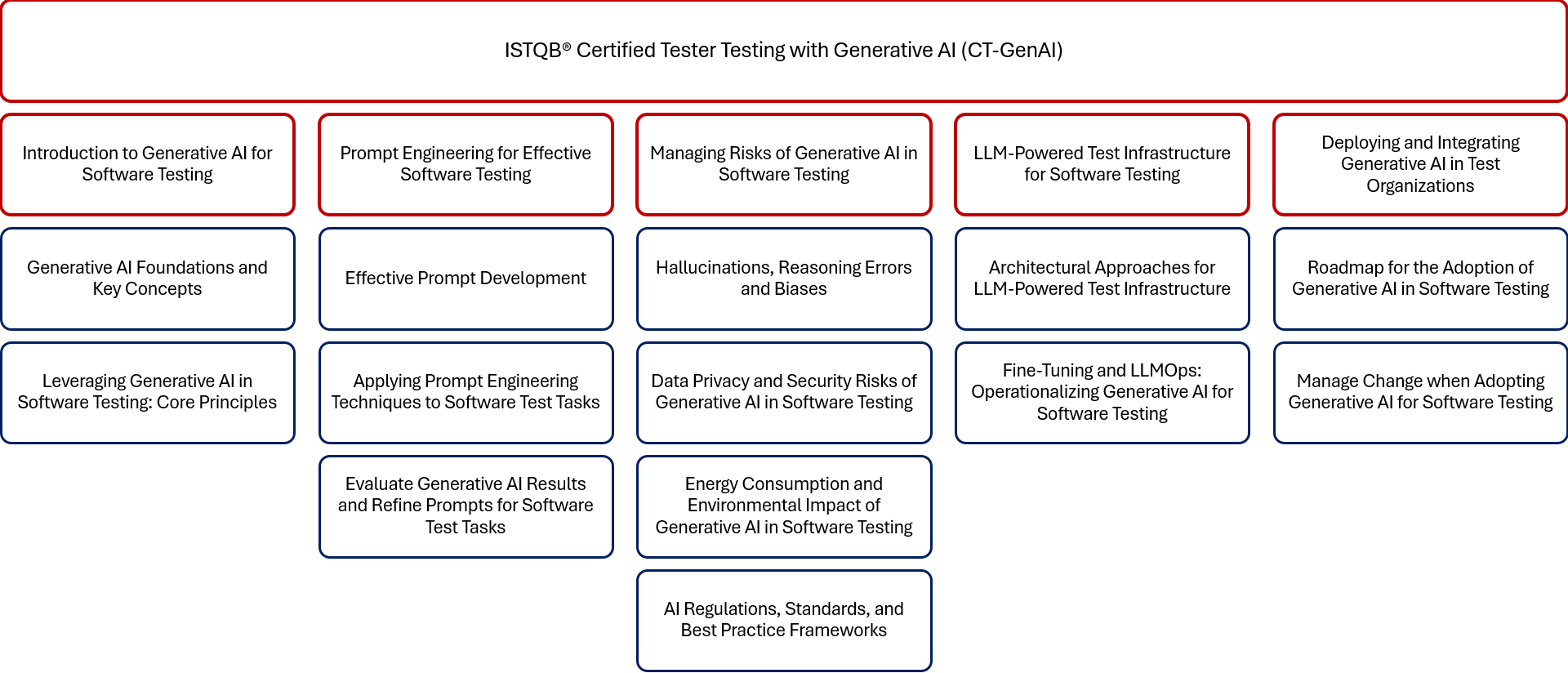
To apply for the Specialist Testing with Generative AI certification, candidates must hold the Foundation Certificate.
The ISTQB® Certified Tester – Testing with Generative AI (CT-GenAI) and provides testing and quality-engineering professionals with a structured, hands-on path to master how, when, and why to use Large Language Models (LLMs) and other generative-AI techniques across the entire test process – from requirements analysis and test design to automation, reporting, and continuous improvement.
It not only explains the fundamentals of GenAI but also builds practical skills through real-world prompt-engineering patterns and applied testing use cases. Testers will learn how to integrate GenAI capabilities responsibly while managing key risks such as hallucinations, bias, security, privacy, and environmental impact.
The qualification is intended for anyone involved in using generative AI for software testing, including testers, test analysts, test automation engineers, test managers, user-acceptance testers and software developers. It is equally valuable to professionals who need a solid understanding of GenAI in testing—project managers, quality managers, software development managers, business analysts, IT directors and consultants.
A candidate who has achieved the CT-GenAI certification should be able to:
Understand the fundamental concepts, capabilities, and limitations of generative AI
Gain insight into the risks and mitigations of using generative AI for software testing
Gain insight into the applications of generative AI solutions for software testing
Contribute effectively to the definition and implementation of a generative AI strategyand roadmap for software testing within an organization
CERTIFIED
SPECIALISTSPECIALIST
ACCEPTANCE TESTING
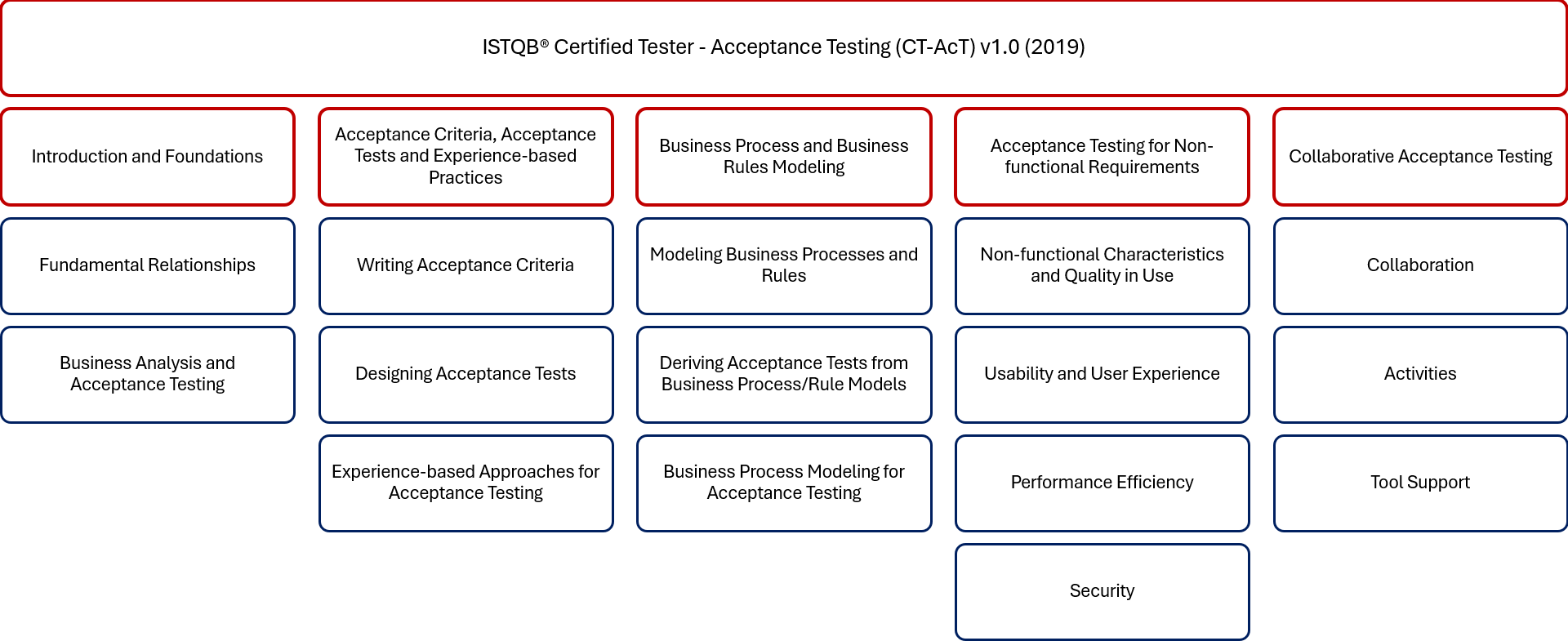
To enroll in the Specialist Acceptance Testing certification, candidates must hold the Foundation Certificate.
This certification is designed for anyone involved in software acceptance testing activities. It includes individuals in roles such as product owners, business analysts, testers, test analysts, test engineers, test consultants, test managers, user acceptance testers, and developers.
The syllabus focuses on concepts, methods, and practices for collaboration between product owners/business analysts and testers in acceptance testing.
Testers preparing for this certification exam should be able to achieve the following objectives:
For product owners and business analysts:
- Contribute to an organization's acceptance testing activities by participating in the design phase of acceptance tests and supporting product alignment with business requirements.
- Contribute to the quality of the acceptance testing process, including validation and verification of produced artifacts.
For testers:
- Contribute to defining acceptance criteria during the requirements definition phase.
- Collaborate efficiently with business analysts and other stakeholders throughout all acceptance testing activities.
- Understand business objectives, communicate with business units, and share common goals for acceptance testing.
CERTIFIED
SPECIALISTSPECIALIST
PERFORMANCE TESTING
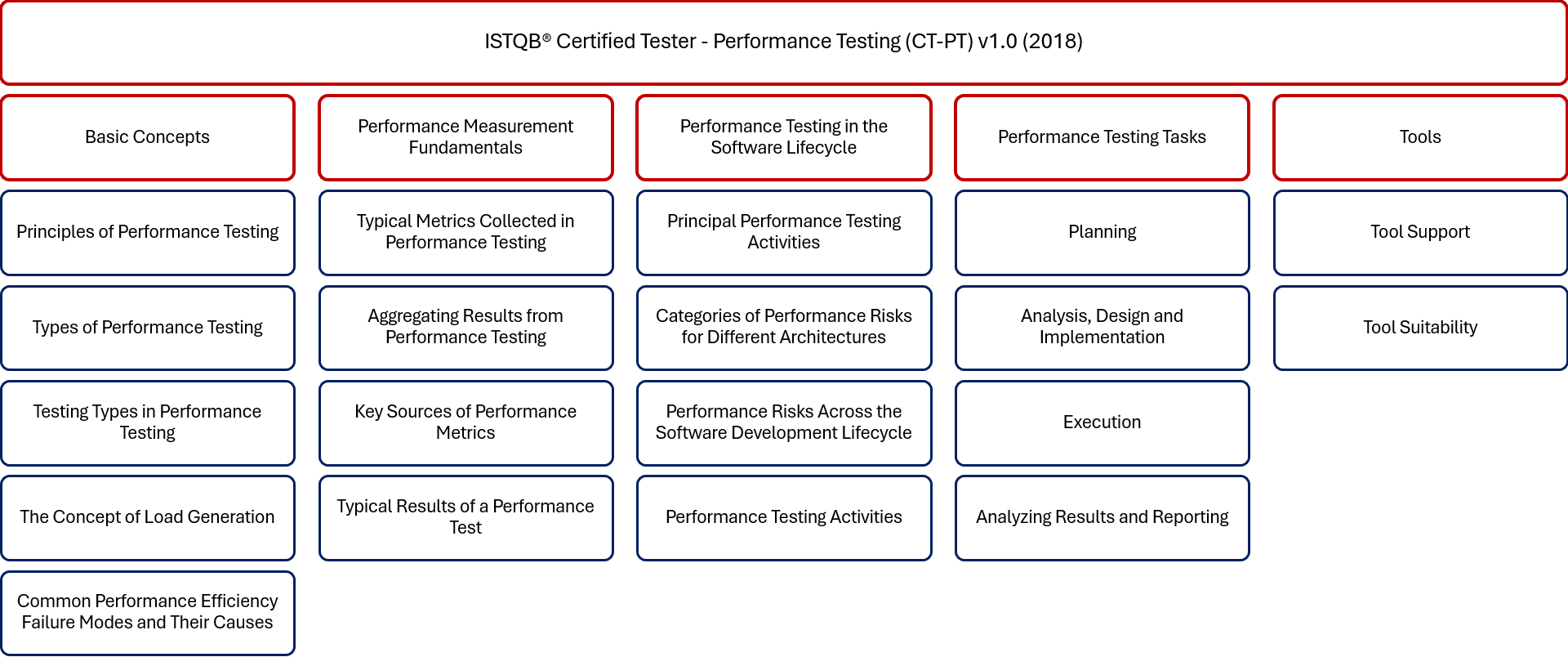
To apply for the Specialist Performance Testing certification, candidates must hold the Foundation Certificate.
Testers preparing for this certification exam should be able to achieve the following objectives:
- Understand the basic concepts of efficiency and performance testing.
- Define performance risks, objectives, and requirements to meet stakeholder needs and expectations.
- Understand performance metrics and how to collect them.
- Develop a performance test plan to meet stated objectives and requirements.
- Conceptually design, implement, and execute basic performance tests.
- Analyze performance test results and communicate the implications to various stakeholders.
- Explain the process, rationale, results, and implications of performance testing to different stakeholders.
- Understand the categories and uses of performance testing tools and the criteria for their selection.
- Determine how performance testing activities align with the software lifecycle.
CERTIFIED
SPECIALISTSPECIALIST
MOBILE APPLICATION TESTING
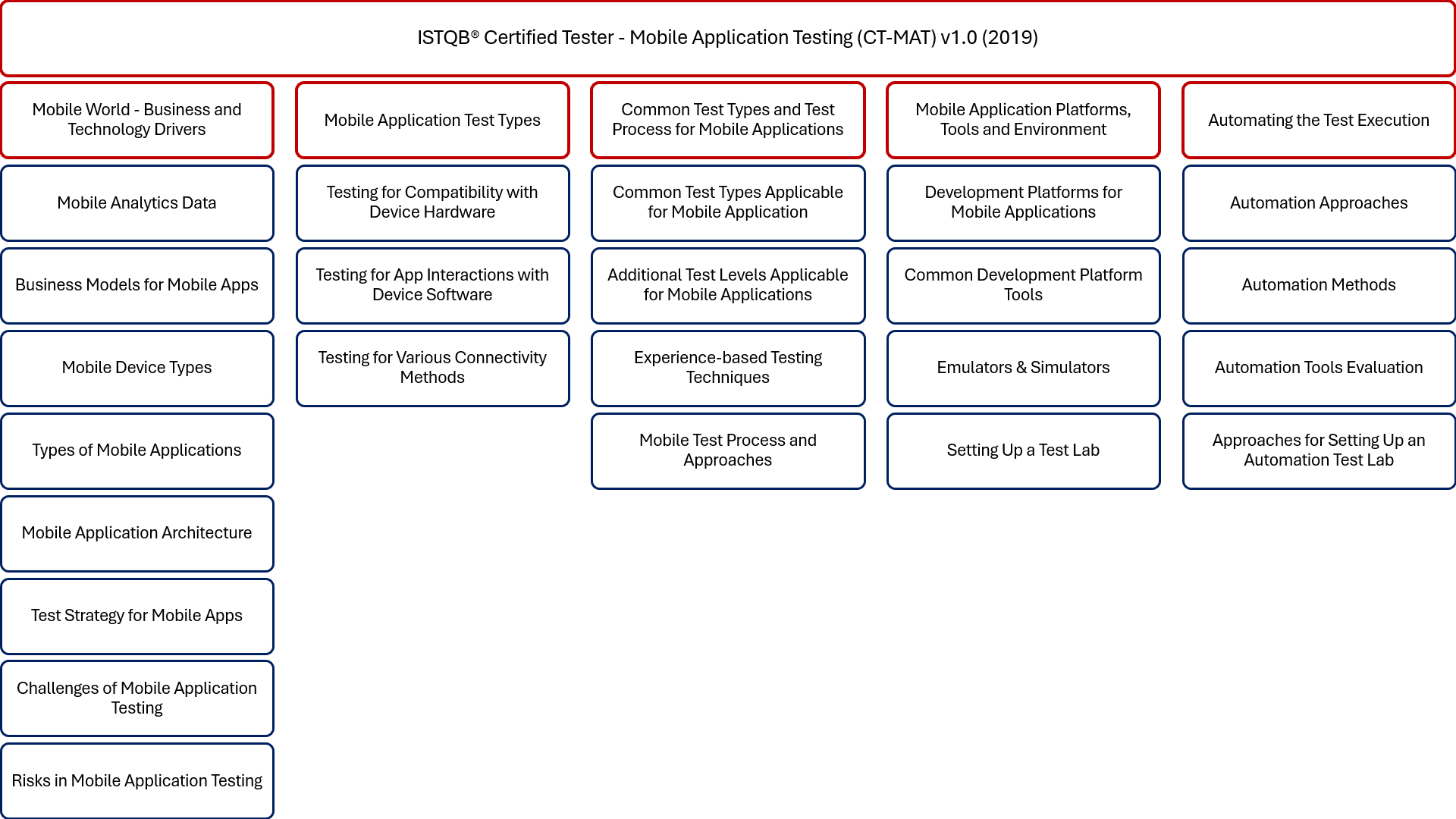
To apply for the Specialist Mobile Application Testing certification, candidates must hold the Foundation Certificate.
This certification is designed for those who wish to further develop their expertise in mobile application testing.
Testers preparing for this certification exam should be able to achieve the following objectives:
- Understand and review the business and technology drivers behind mobile applications to create a testing strategy.
- Identify and understand the key challenges, risks, and expectations associated with testing a mobile application.
- Apply specific types and levels of testing for mobile applications.
- Apply common types of tests, such as those mentioned in the ISTQB® Certified Tester Foundation Level syllabus, in the specific context of mobile devices.
- Perform activities specifically required for testing mobile applications as part of the core ISTQB® testing process.
- Identify and use appropriate environments and tools for mobile application testing.
- Understand methods and tools specific to supporting mobile application test automation.
CERTIFIED
SPECIALISTSPECIALIST
AUTOMOTIVE SOFTWARE TESTER
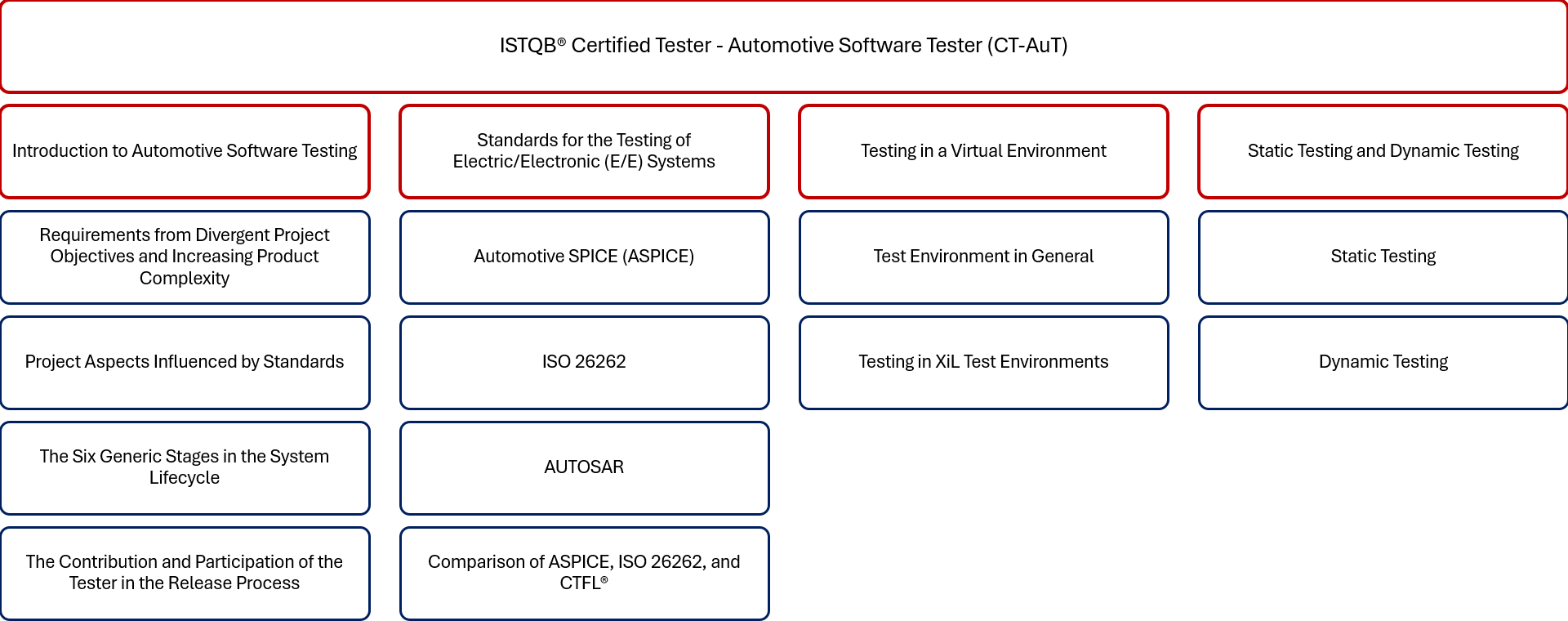
To apply for the Specialist Automotive Software Tester certification, candidates must hold the Foundation Certificate.
Testers preparing for this certification exam should be able to achieve the following objectives:
- Collaborate effectively within a testing team.
- Adapt testing techniques acquired from the ISTQB® Certified Tester Foundation Level (CTFL®) certification to the specific requirements of Automotive projects.
- Consider the fundamental requirements of relevant automotive standards (e.g., Automotive SPICE®, ISO 26262) and select appropriate testing techniques.
- Apply virtual testing methods (e.g., HiL, SiL, MiL) in testing environments.
CERTIFIED
SPECIALISTSPECIALIST
SECURITY TEST ENGINEER
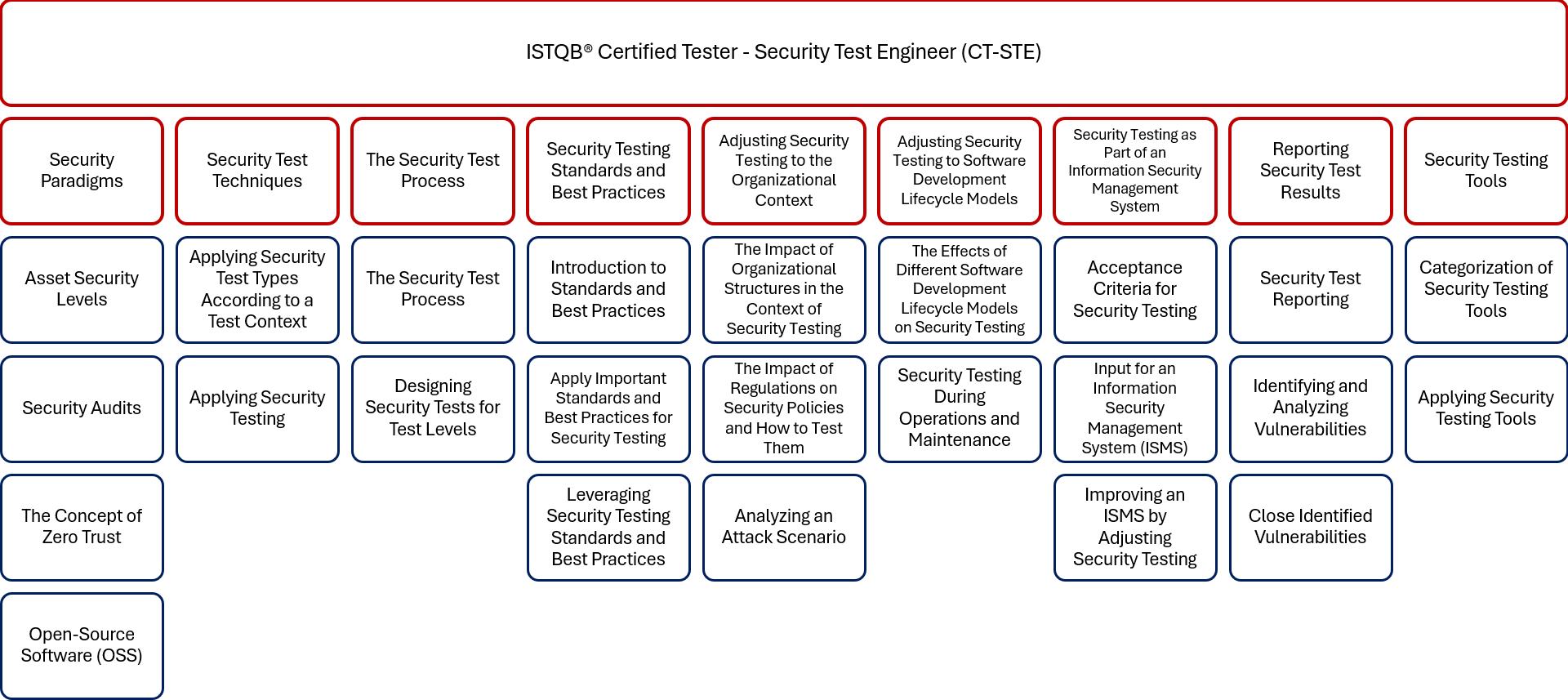
To apply for the Specialist Security Test Engineer certification, candidates must hold the Foundation Certificate.
The ISTQB® Certified Tester Security Test Engineer (CT-STE) certification focuses on how security testing should be performed, presenting methodologies, standards, techniques, processes, and tools. With the increasing frequency and sophistication of cyberattacks, a robust, engineering-focused approach to security testing is more critical than ever. Without security testing aligned to the specific risk levels of an IT system, vulnerabilities can be exploited, potentially during production, with devastating consequences. The CT-STE certification aims to fill this gap, ensuring that professionals can proactively enable full transparency into actual security risk exposure to protect systems from emerging threats.
Testers intending to take this certification exam should be able to achieve the following objectives:
- Understand fundamental security paradigms and their impact on security testing
- Use and apply appropriate security testing techniques and understand their strengths and limitations
- Contribute to the planning, design, and execution of security tests
- Understand how standards and best practices can be used for security testing
- Adapt and execute security testing activities based on the specific organizational context
- Adapt and execute security testing activities based on specific development methods and software development lifecycles
- Enter security test results into an Information Security Management System (ISMS) for active security risk management
- Collect, evaluate, and aggregate test results, and write a detailed test report with all tests and results
- Based on the required security testing approach, identify appropriate tool requirements and assist in the selection of security testing tools
CERTIFIED
SPECIALISTSPECIALIST
FINANCE TESTING
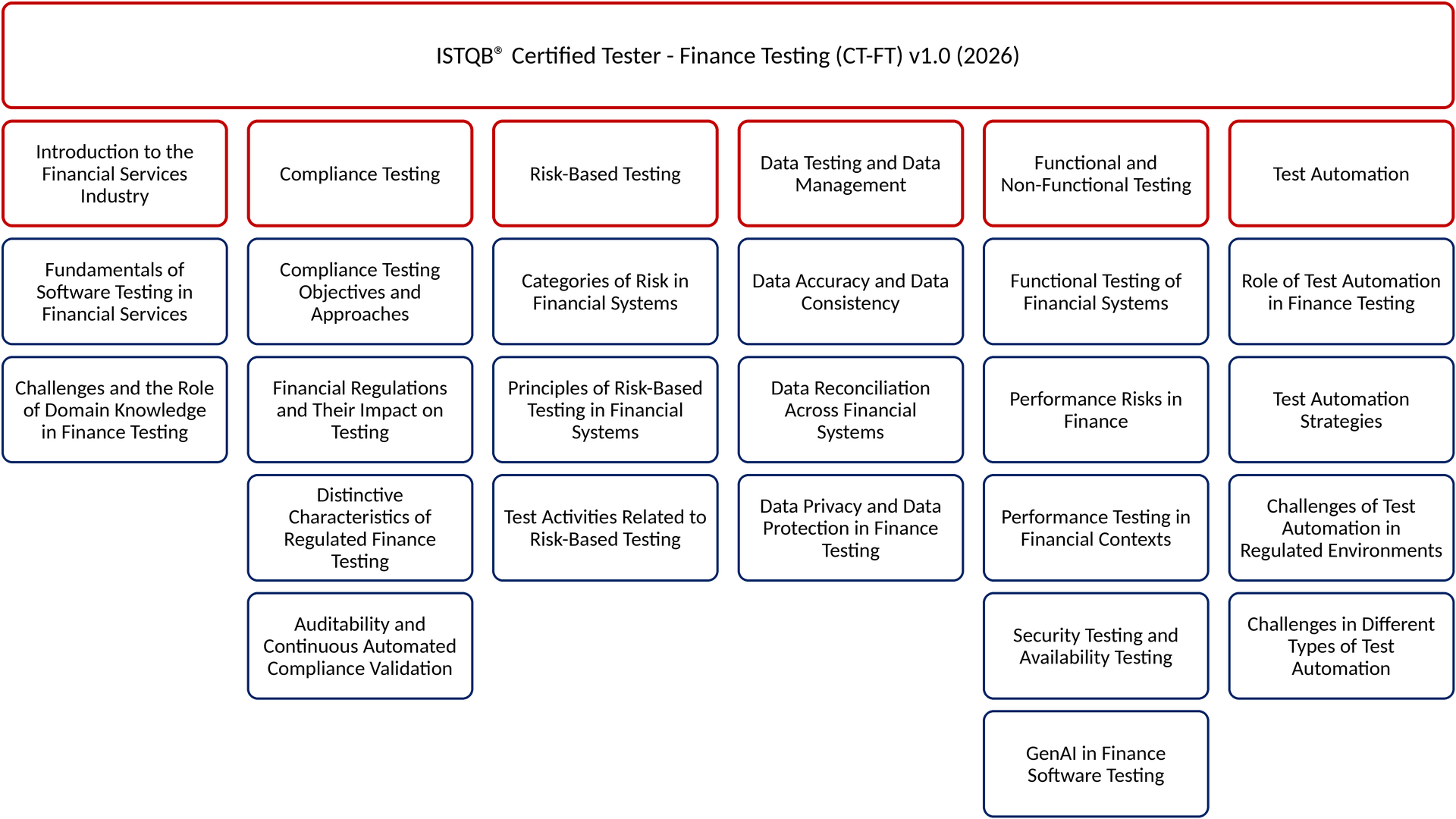
To apply for the Specialist Finance Testing certification, candidates must hold the Foundation Certificate.
The ISTQB® Certified Tester – Finance Testing (CT-FT) certification focuses on the testing knowledge and skills required for software systems in the financial services industry. It covers the structure of the financial industry, compliance testing, risk-based testing, data testing and management, functional and non-functional testing, and test automation in regulated financial environments.
This syllabus was created to support professionals working with financial systems where quality, regulatory compliance, data integrity, security, reliability, and performance are critical. It provides an industry-specific extension to the Certified Tester Foundation Level qualification and helps candidates understand the testing challenges specific to the financial industry in banks, fintech companies, insurance companies, payment service providers, and other financial institutions.
Testers intending to take this certification exam should be able to achieve the following objectives:
- Understand the structure of the financial industry, its institutions, systems, and processes, and explain the specific testing challenges in this area.
- Apply testing practices that support compliance with financial regulations and standards, ensuring auditability, traceability, and documentation requirements.
- Apply risk-based testing approaches to financial systems, prioritizing testing activities based on business, technical, and regulatory risks.
- Understand testing practices that ensure the accuracy, consistency, and protection of data in financial systems, including the use of masking and anonymization techniques.
- Apply functional and non-functional testing techniques in the financial sector, with a focus on performance, reliability, and security.
- Understand the role of test automation in financial environments and effectively apply automation strategies in both legacy and modern systems, taking into account regulatory constraints.
CERTIFIED
SPECIALISTSPECIALIST
QUALITY IN DEVOPS
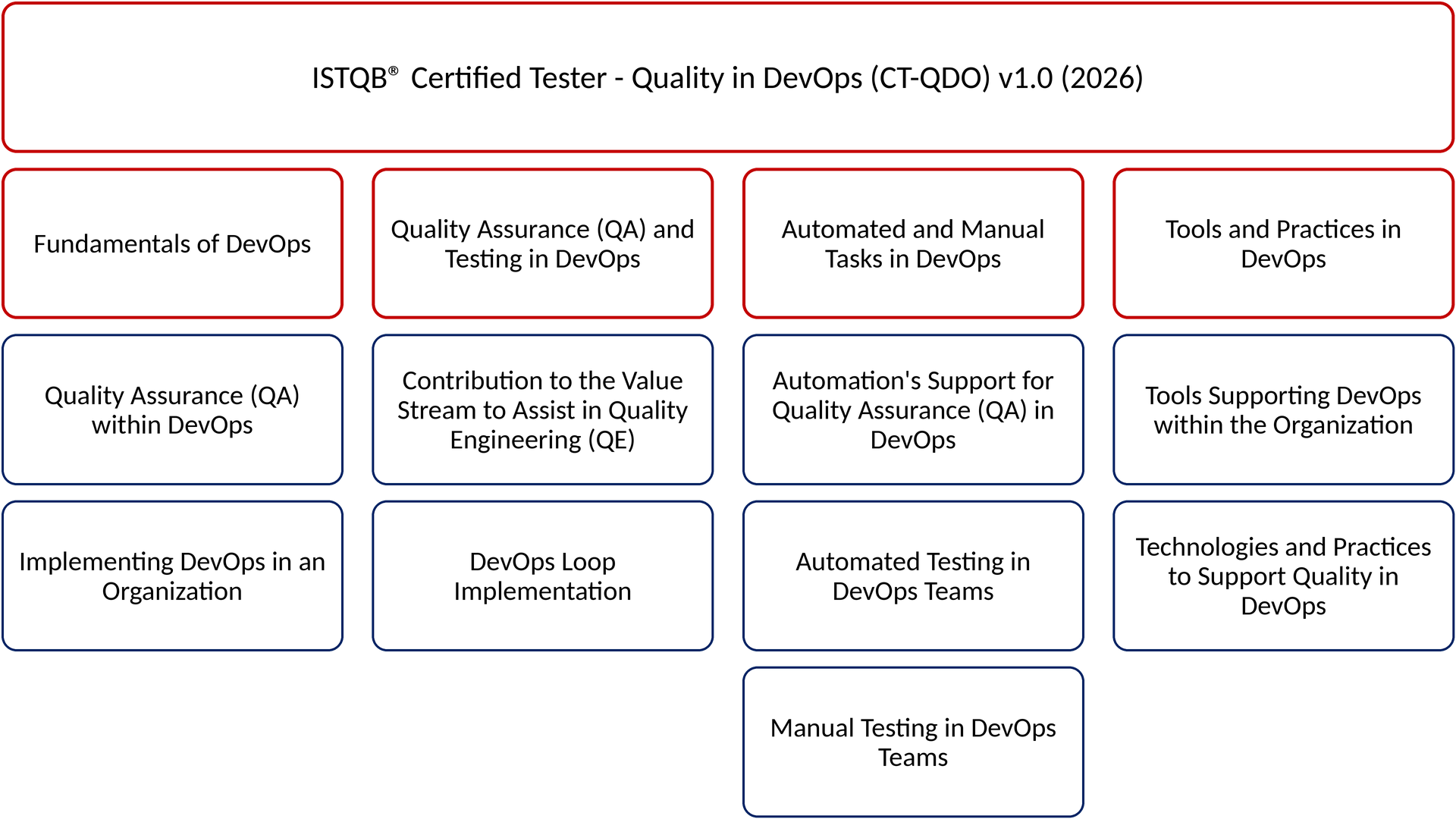
To apply for the Specialist Quality in DevOps certification, candidates must hold the Foundation Certificate.
DevOps has become the primary method for modern software development in many industries. It extends the concepts of Agile software development, such as autonomy, frequent delivery, and a focus on timely customer feedback, to achieve the desired software quality. Quality assurance and testing play a central role in DevOps culture. In a DevOps context, quality engineering, including QA and testing, is applied throughout all phases of the software development lifecycle.
The ISTQB® Certified Tester Quality in DevOps (CT-QDO) certification supports those involved in DevOps-based software development in applying appropriate testing and quality activities to achieve the desired level of quality for their solutions.
The program is particularly useful for anyone at the intersection of quality and DevOps—testers, test analysts, test engineers, test automation engineers, test managers, quality managers, software developers, DevOps engineers, system reliability engineers, operations engineers, scrum masters, and product owners—as it establishes a common language and methodology for quality engineering across the DevOps team. This aligns perfectly with the DevOps principle that quality is everyone's responsibility, not just the tester.
Testers intending to take this certification exam should be able to achieve the following objectives:
- Explain how Quality Assurance is supported by DevOps concepts and how it contributes to them
- Understand the concepts of DevOps implementation in an organization
- Contribute to all phases of the value stream to support Quality Engineering
- Contribute to the implementation of the DevOps cycle
- Describe how automation supports Quality Assurance in DevOps
- Implement automated testing in DevOps teams
- Implement manual testing in DevOps teams
- Select tools to support DevOps within the organization
- Understand the technologies and practices that support quality in DevOps